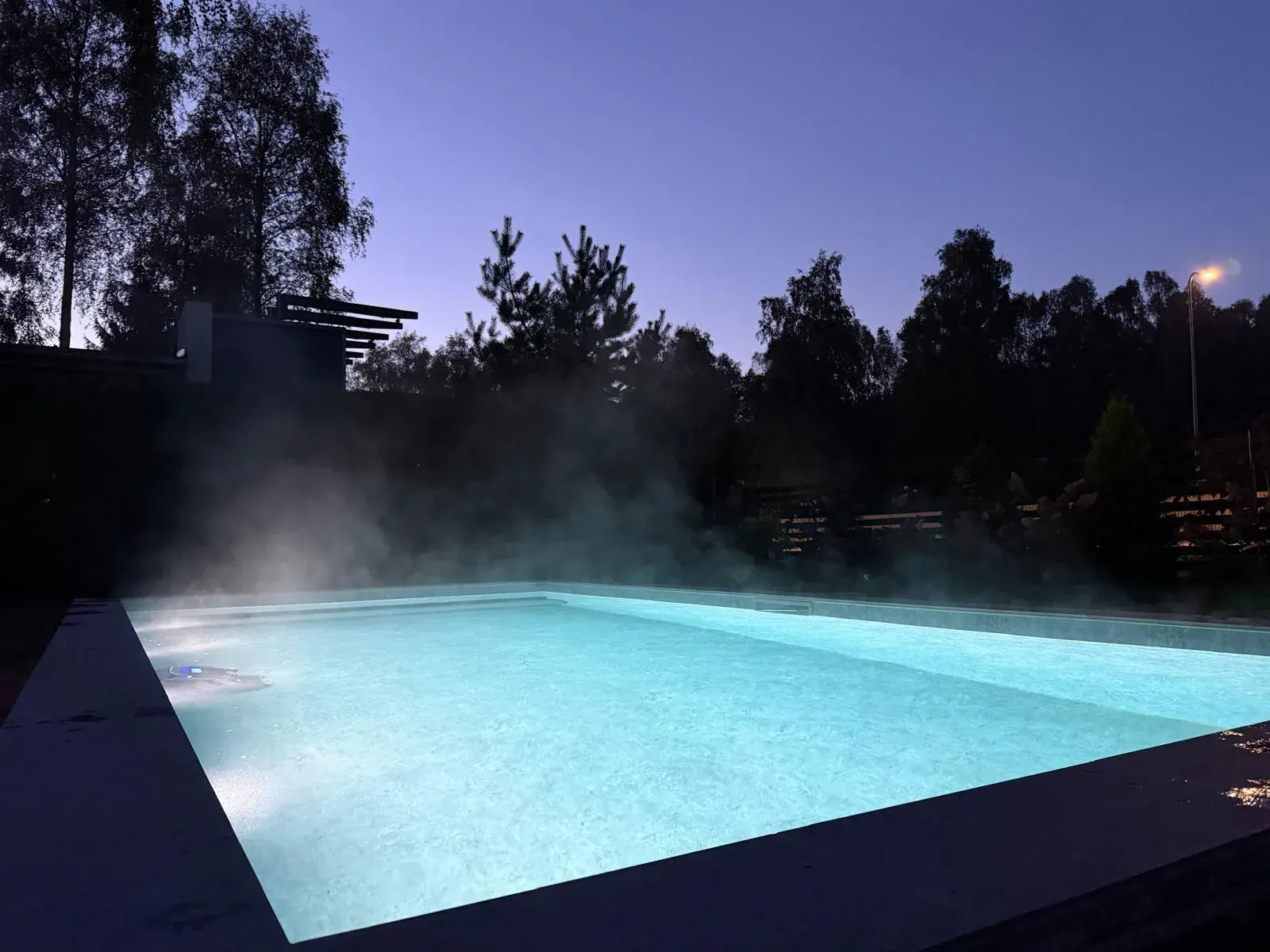
In the Latvian climate, heating extends the swimming season by several months. Garden pools most often use an air-to-water heat pump: it draws heat from the outdoor air and passes it to the pool water, using far less electricity than the heat it delivers.
How much output you need
The output you need depends on the water volume, the temperature you want and how often the pool is covered. In Plungo pools we use Aquaviva TurboX inverter heat pumps, which work down to -15 °C:
- Cool — heating optional,
- Pearl — a 9 kW heat pump,
- Oasis — 10.5 kW,
- Harmony — 13.5 kW.
- For larger pools or a longer season — a more powerful one, for example the Aquaviva TurboX 16 kW for pools of up to 70 m³.
Why an air-to-water heat pump is the most popular way to heat a garden pool, how to choose the output and what the coefficient of performance (COP) means.
What COP means
The coefficient of performance (COP) shows how many times more heat a heat pump delivers than the electricity it uses. Good inverter heat pumps reach a COP of about 5–15 — it varies with air and water temperature. An inverter heat pump adjusts its output to demand, so it runs more quietly and economically.
Cover — the biggest saving
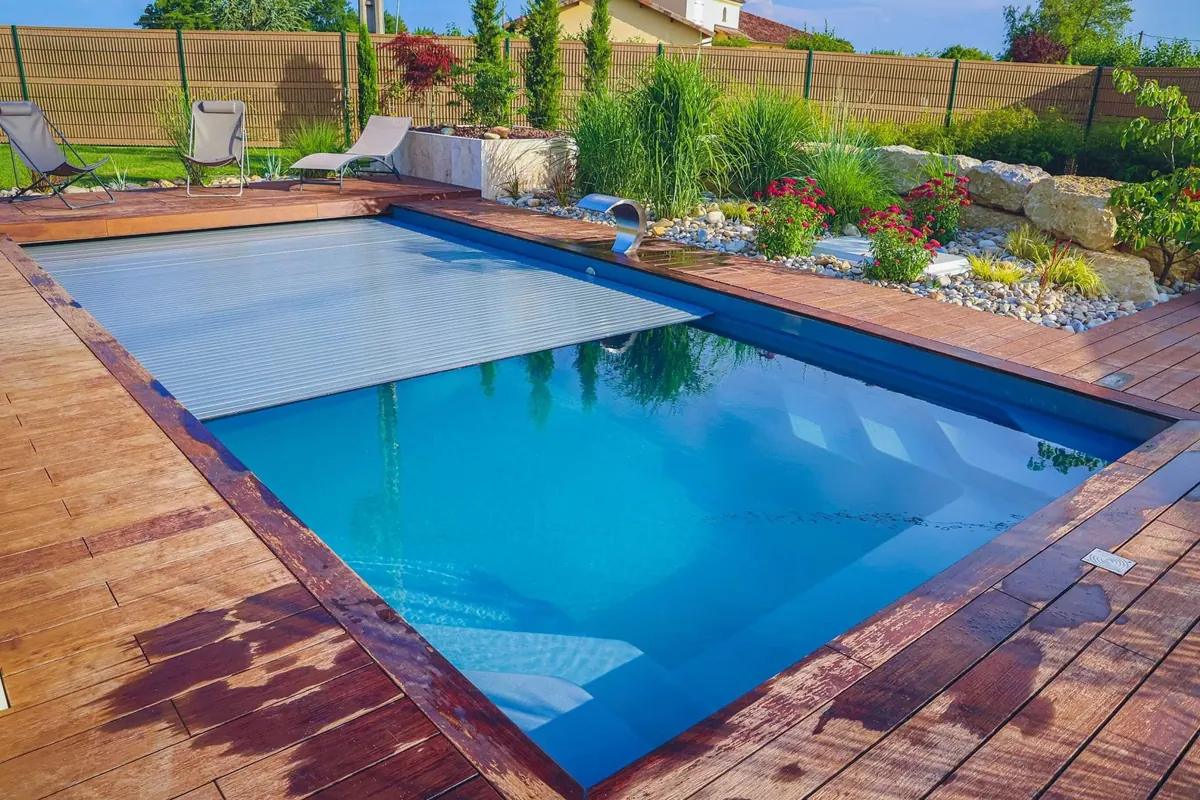
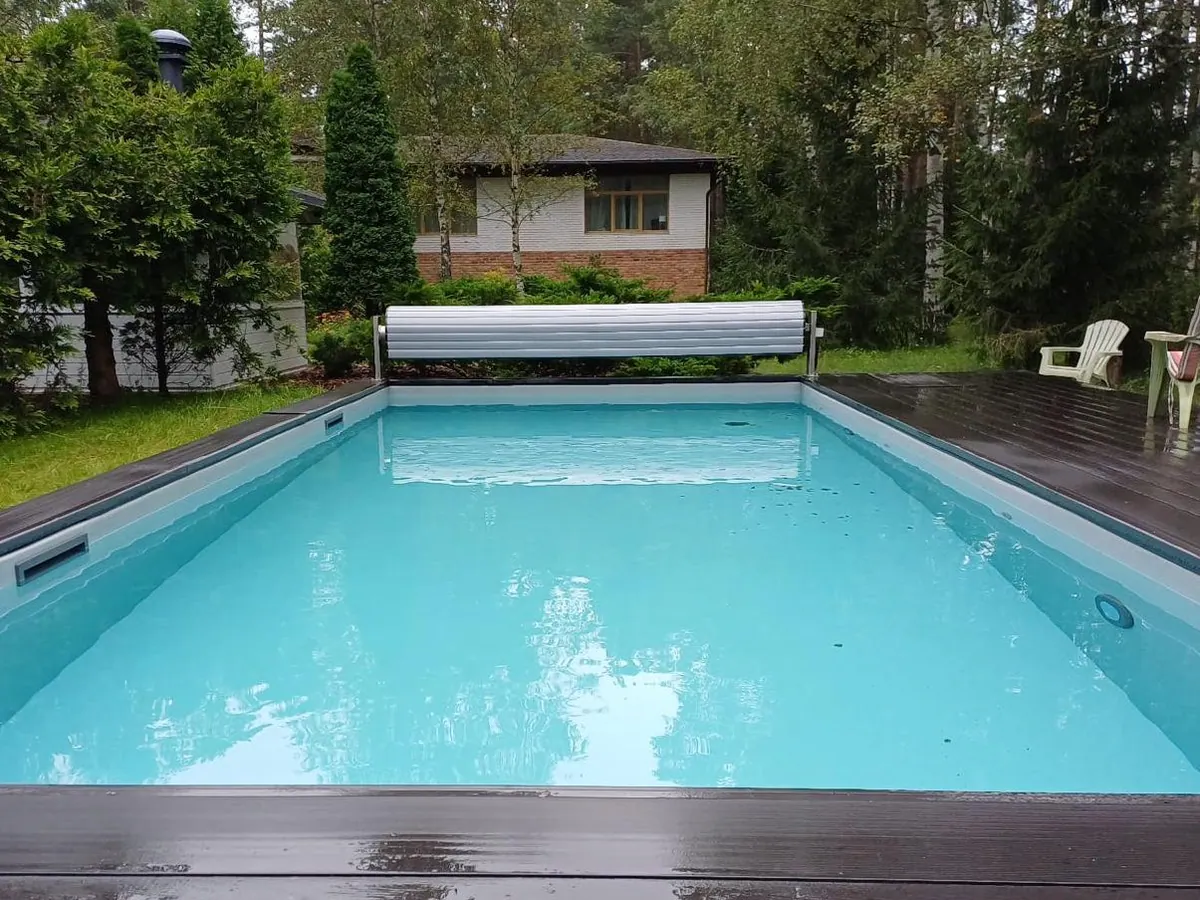
Most heat escapes through the water surface. That is why an automatic cover matters as much as the heat pump: it holds the heat in overnight, while transparent Solar slats warm the water by a further 4–8 °C on a sunny day.
If you already have a pool and are looking for a heat pump, choose one in our shop.